The Sowers

Description
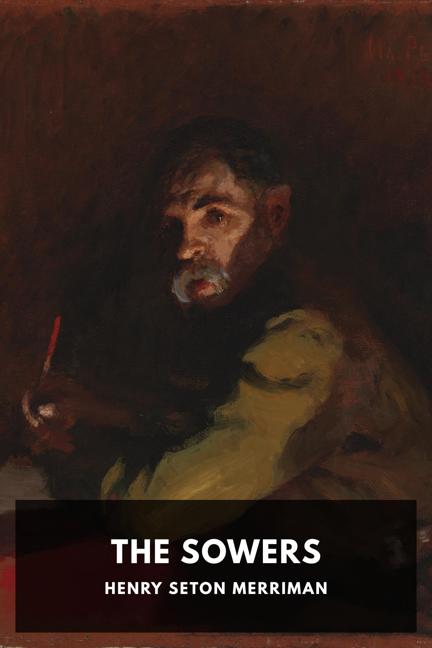
With The Sowers, a story ranging from the upper class drawing-rooms of London, Paris, and St. Petersburg to the vast estates and peasant villages of the Russian steppe, Henry Seton Merriman enjoyed his greatest popular success. Its protagonist is a young man of strong ideals and character who is known to his friends and London society as Paul Howard Alexis, to the vicious Russian aristocracy and the thousands of resentful peasants on his estate as Prince Pavlo Alexis, and to those same impoverished thousands as the “Moscow Doctor” sent by God, whose tireless, compassionate, selfless care sustains them. This enigmatic man is understood only by his closest advisor, friend, and confidant, Karl Steinmetz, a cosmopolitan utopian philosopher given to bouts of cynicism and sentimentalism. Together they resolve, come what may, to carry out the work of a charitable organization banned by the Russian state but crucial to the well-being of millions of oppressed peasants.
The dangers are tremendous. The leadership of their organization is exiled by the Tsar’s secret police; nobles concerned with their peasants’ welfare are undermined by their peers; those same peasants, suspicious and superstitious, fear that anyone could be a spy or that any change in their lives will only deepen their misery; revolutionaries seek to exploit the growing unrest for their own political ends, while others seek to exploit it for their personal advantage. As Alexis and Steinmetz navigate this web of treachery, they realize that the greatest dangers and betrayals may come from those closest to them.
In The Sowers, Merriman wrote with authority about the physical and political landscape of Russia, and with passion concerning those liberal ideals which became more evident in his later novels. For contemporary readers, the novel presented an exotic, mysterious place, the Russian Empire of the Romanovs, to which few traveled and which even fewer understood. As other European empires slowly changed and liberalized, Russia, with its vast spaces and rural millions, seemed increasingly anachronistic. Several of the more idealistic characters in the novel give voice to the author’s own sense that Russia would soon face an existential crisis when its peasantry finally rose up against those who had oppressed them for centuries, though the nature of such a revolution was unclear, and its trigger might not come in their lifetimes. For today’s reader, with the benefit of historical hindsight, those suggestions are uncannily prescient.
Published in 1896, The Sowers anticipated the first Russian revolution by nine years. The extreme violence which attended the final fall of the Romanovs and their empire in 1917 occurred just fourteen years after Merriman’s own premature death in 1903.
Read free
This ebook is thought to be free of copyright restrictions in the United States. It may still be under copyright in other countries. If you’re not located in the United States, you must check your local laws to verify that this ebook is free of copyright restrictions in the country you’re located in before accessing, downloading, or using it.

Download for ereaders
-
Compatible epub — All devices and apps except Kindles and Kobos.
-
azw3 — Kindle devices and apps. Also download the Kindle cover thumbnail to see the cover in your Kindle’s library. Despite what you’ve been told, Kindle does not natively support epub. You may also be interested in our Kindle FAQ.
-
kepub — Kobo devices and apps. You may also be interested in our Kobo FAQ.
-
Advanced epub — An advanced format that uses the latest technology not yet fully supported by most ereaders.
Read online
A brief history of this ebook
More details
Sources
Transcriptions
Page scans
Improve this ebook
Anyone can contribute to make a Standard Ebook better for everyone!
To report typos, typography errors, or other corrections, see how to report errors.
If you’re comfortable with technology and want to contribute directly, check out this ebook’s GitHub repository and our contributors section.
You can also donate to Standard Ebooks to help fund continuing improvement of this and other ebooks.